• 07/01/2005

    Pankararu


    POVO
    PANKARARU


    Outras denominações:


    Outras grafias:


    Língua:


    Tronco Lingüístico:


    Família lingüística:


    Língua materna:


    Perderam língua nativa


    Línguas faladas:


    População:


    No Estado:


    25


    Total:


    25


    Localização:


    Terra Indígena:


    Pankararu


    Estado:


    Minas Gerais


    Município:


    Coronel Murta


    Regional e/ou Equipe do Cimi que presta acompanhamento:


    Cimi Regional Leste – e-mail: [email protected]


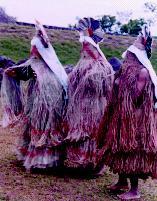
    Breve histórico: os Pankararu são originários do Estado de Pernambuco. Atualmente, um grupo familiar de 25 indígenas vive no município de Coronel Murta, Vale do Jequitinhonha, em uma área de 60 hectares, doada pela Diocese de Araçuaí. Os Pankararu, através dos conhecimentos ancestrais e sua religião, estão recriando em uma aldeia própria, as formas tradicionais de seu povo expressarem e viverem sua cultura. O grande desafio colocado para este povo é garantir a sobrevivência em uma das regiões mais pobres de Minas Gerais, tarefa que buscam enfrentar no dia-a-dia.

    Read More
  • 07/01/2005

    Pataxó


    POVO
    PATAXÓ


    Outras denominações:


    Outras grafias:


    Língua:


    Tronco Lingüístico:


    Família lingüística:


    i


    Língua materna:


    Perderam a língua nativa


    Línguas faladas:


    População:


    No Estado:


    350


    Total:


    350


    Localização:


    Terra Indígena:


    Fazenda Guarani


    Estado:


    Minas Gerais


    Município:


    Carmésia


    Senhora do Porto


    Dores Guanhães


    Regional e/ou Equipe do Cimi que presta acompanhamento:


    Cimi Regional Leste – e-mail: [email protected]


    Breve histórico: o povo Pataxó é originário do sul da Bahia e, desde a década de setenta, residem na Fazenda Guarani, município de Carmésia. Contam com uma população de aproximadamente 350 indígenas, vivendo em uma reserva demarcada de 3.270 hectares. Vivem do plantio de roças de subsistência e da venda do seu artesanato. Como os seus ancestrais, os Pataxó manifestam sua cultura através da pintura corporal, danças, músicas e outros costumes tradicionais. É um povo que se orgulha do seu passado e faz da sua memória o maior patrimônio do seu povo.

    Read More
  • 07/01/2005

    CIMI INFO-BRIEF 645

    JURISTISCHE HINDERNISSE AUFGRUND VON UNTERLASSUNGEN DER REGIERUNG BEI DER HOMOLOGATION VON RAPOSA/SERRA DO SOL


    Ministerin Ellen Gracie vom Obersten Bundesgericht hob am 03.01.2005 den Erlass 820 des Justizministeriums auf, der 1998 die fortlaufende Demarkierung des indigenen Gebietes Raposa/Serra do Sol in Roraima anordnete. Das Plenum des Obersten Bundesgerichts wird die Verfügung der Ministerin im Februar behandeln. Bis dahin bleibt das Verfahren der Homologation eingestellt.


    Die Regierung hat in den letzten zwei Jahren nichts getan wie zuvor auch die Regierung Fernando Henrique Cardoso, um Raposa/Serra do Sol fortlaufend zu demarkieren. Eine Möglichkeit dazu hätte zwischen dem 15.12.2004 und 03.01.2005 bestanden, nachdem Minister Carlos Ayres Britto alle Gutachten gegen den Erlass 820 aufgehoben hatte.


    Bei den Verhandlungen für das Budget 2005 kamen die Interessen regionaler Oligarchien und Grossgrundbesitzer mehr zum Tragen als die Anerkennung der Rechte der Indios von Raposa/Serra do Sol. Je länger die Entscheidung verzögert wird, desto stärker wird der Angriff antiindigener Sektoren auf die Verfassungsrechte der brasilianischen Völker von Roraima. Reisproduzenten haben angekündigt, dass sie mehr indigenes Land für ihre Plantagen beanspruchen werden. Die Androhung von Gewalt gegen die Indios steht in der Region auf der Tagesordnung.


    Die Homologation von indigenen Gebieten ist vielfach ein politisches Spiel mit den oligarchen Sektoren des Landes. Appelle der zivilen Gesellschaft, der CNBB oder internationaler Organe, die von der brasilianischen Regierung die Garantie der indigenen Rechte fordern, finden kein Gehör bei der Regierung.


    Eine Zeitung in Roraima berichtete von eine Versammlung gestern in Brasília mit Ottomar Pinto (PTB), Gouverneur von Roraima, Minister Aldo Rebelo, den Senatoren Mozarildo Cavalcanti (PPS), Augusto Botelho (PDT) und Bundesabgeordneten. Bei diesem Treffen kündigte an, dass die endgültige konsensuale Entscheidung bevorstehe und niemand überrascht sein werde.


    Das Recht der indigenen Völker, das der Staat in der Bundesverfassung anerkannt hat und vom Justizminister bestätigt wurde, wird erneut auf der politischen Bühne diskutiert. Das Ergebnis ist gegen die Indios, wie die Auseinandersetzung zwischen den ungleichen Kräften zeigt.


    Man verhandelt über die Rechte und wie immer siegt das Gesetz der Stärke. Die Schwachen werden unterdrückt. Diese Strategie hat ein grausames Antlitz. Indios werden verletzt oder gar getötet, Siedlungen zerstört.


    Es gibt keinen Zweifel, dass die Indios seit Menschengedenken in Raposa/Serra do Sol leben. Dennoch wollen wirtschaftliche Sektoren das indigene Gebiet für sich beanspruchen.


    INDIOS BESETZEN SITZ DER FUNAI IN MANAUS


    Seit 03.01.2005 haben Indios den Sitz der FUNAI in Manaus (AM) besetzt und fordern die Demarkierung jener indigenen Gebiete, die in die Zuständigkeit der Regionalverwaltung der FUNAI in Manaus fallen. Die Indios beklagen die schlechte Amtsführung des Verwalters, Benedito Rangel de Moraes, und wollen seine Entlassung. Der Verwalter hatte kein Interesse an der Aufklärung der Vergewaltigung von indigenen Frauen durch Mitarbeiter der FUNAI in Manaus.


    Die FUNAI strebte gerichtlich die Reintegration von Besitz des Gebäudes in Manaus an. Laut Agência Brasil, kündigte der stellvertretende FUNAI-Präsident Roberto Lustosa eine Untersuchung zur Klärung der Vorwürfe an. Allerdings würde erst nach dem Ende der Besetzung mit den Indios verhandelt.


    Die Indios wollen abziehen, wenn FUNAI-Präsident Mercio Pereira Gomes nach Manaus kommt. Der Indio Benjamin Baniwa berichtete, dass Pereira Gomes aufgrund der Invasion nicht nach Manaus kommen wolle und er die Reintegration von Besitz des Gebäudes bereits beantragt habe.


    Die Indios bemühen sich um einen Vermittler, um  das Eindringen der Bundespolizei in das Gebäude zu verhindern. „Wir haben uns an Senator Jefferson Peres und Abgeordnete des Bundesstaates gewandt. Das Verhalten von Rangel und des FUNAI-Präsidenten ist befremdend. Sie sollten die indigenen Interessen verteidigen. Statt dessen rufen sie die Polizei“, so Baniwa.


    Zuerst kamen 32 Indios Mura. Inzwischen sind 130 Indios von 10 Ethnien aus Amazonien in Manaus und sie erheben immer mehr Vorwürfe gegen den Regionalverwalter. Einige der Vertreter leben über 600 km von der Stadt entfernt.


    „Es gibt nichts, was Rangel als Verwalter halten könnte. Er wird nicht mehr in mein Gebiet dürfen“, sagte ein Indio Baniwa.


    Brasília, 06. Januar 2005


    Cimi – Indianermissionsrat


    Read More
  • 07/01/2005

    Newsletter n. 645

    GOVERNMENT NEGLIGENCE IN THE RATIFICATION OF Raposa/Serra do Sol land PAVES THE WAY FOR NEW OBSTACLES


    On Monday (January 3), justice Ellen Gracie of the Supreme Federal Court suspended Administrative Ruling n. 820 issued by the Ministry of Justice, which had, in 1998, established the demarcation of the Raposa/Serra do Sol indigenous land as a continuous strip in Roraima.


    As a result of this new court decision, obstacles preventing the ratification of the indigenous land as a continuous strip have returned. The decision of the justice must be reviewed in a plenary session of the Supreme Federal Court, which will reconvene in February. Until that time, the process of ratifying the bounds of the indigenous land will remain suspended.


    Thus, just like during the Fernando Henrique Cardoso government in 2003 and at the start of 2004, the Federal Government was negligent, and allowed the opportunity to ratify the Raposa/Serra do Sol land as a continuous strip to pass it by. This had been possible between December 15, when justice Carlos Ayres Britto suspended the court orders against Administrative Ruling n. 820, and January 3, 2005.


    With the 2005 budget negotiations and the maintenance of the wide base which sustains the government, which includes regional oligarchies, large landowners and other interested parties, once again recognition of the rights of the indigenous people of Raposa Serra do Sol has been delayed.


    Every time this decision is postponed, the offensive of the anti-indigenous sectors against the constitutional rights acquired by Brazilian peoples gains intensity. Information has reached us from Roraima according to which rice farmers are already planning to invade more indigenous lands with their plantations. The scenario of threats of violence against the indigenous people continues likely in the region.


    Ratification of indigenous lands creates, in the majority of cases, tension in the political game with the country’s oligarchic sectors.


    Not even the appeals of Brazilian civil society, CNBB or international bodies such as the OAS, which asked the Brazilian government to adopt precautionary measures to safeguard indigenous rights, seem to have been enough for the government.


    According to a newspaper in Roraima, in a meeting held at the Presidential Office yesterday with the State Governor, Ottomar Pinto (PTB), minister Aldo Rebelo, senators Mozarildo Cavalcanti (PPS) and Augusto Botelho (PDT), and federal deputies from Roraima, the President stated that the final decision on demarcation would be close to a consensus and nobody would be taken by surprise.


    The rights of indigenous people, which have already been recognized by the Brazilian state in the Federal Constitution and confirmed by the Minister of Justice, have been brought back into the political arena to be discussed again, with a predetermined result going against the indigenous, due to the dispute between unequal forces.


    A process of rights negotiation, when the law of the strongest always dominates, has therefore begun. The first question asked of the indigenous people concerns how great a part of their rights they would be willing to give up. To force through an agreement, the weaker party is subjected to all types of pressure. At local level, this strategy reveals its cruelest side with indigenous people getting injured or even shot dead, the destruction of communal houses, and the kidnapping of religious people in the Diocese of Roraima, who are known for their position in favor of the indigenous cause together with the negligence of the authorities.


    There is no doubt about the historic presence of indigenous people in the Raposa/Serra do Sol land, but there is a strong economic interest in the indigenous land.


    INDIGENOUS PEOPLE OCCUPY FUNAI HEADQUARTERS IN MANAUS. INSTITUTION HAS REQUESTED REposseSSION


    Since last Monday (January 3), indigenous people have been occupying the headquarters of the National Indigenous Foundation in Manaus in the state of Amazonas to request the demarcation of indigenous lands under the operational responsibility of Funai’s Regional Administration in Manaus. They are also asking for the substitution of the current manager of the foundation, Benedito Rangel de Moraes. The indigenous people allege bad management and hold the manager responsible for not investigating cases of rape against indigenous women that were carried out by employees of the regional institution in Manaus.


    The National Foundation for Indigenous People (Funai) has appealed to the courts with a request to repossess the headquarters in Manaus. According to the Agência Brasil News Agency, the interim president of Funai, Roberto Lustosa, has said that an inquiry would be opened to investigate these claims. Lustosa added, however, that he would not negotiate with the indigenous people whilst they remained in the foundation’s headquarters in Manaus.


    The indigenous people have confirmed that they will only leave the building in the presence of the president of Funai, Mercio Pereira Gomes. According to Benjamim Baniwa, an indigenous person, Pereira Gomes said this morning that he will not go to Manaus. “He said that he will not come because he considers this to be an invasion and has already asked for the building to be repossessed.”


    The indigenous people are looking for interlocutors to prevent the Federal Police from entering the building. “We are waiting for Senator Jefferson Peres and state deputies to try and find a solution. The behavior of Rangel and the president, who ought to be defending the interests of indigenous people, in calling the police is strange”, Baniwa argues.


    Baniwa also said that the movement, which started off with 32 indigenous members of the Mura people, now involves 130 indigenous people from 10 ethnic groups from the state of Amazonas. Some of the peoples present live up to 600km from Manaus and, as new peoples arrive, the accusations against the regional manager are increasing.


    “Rangel can no longer continue in a management role. There is no way that he can go into indigenous areas. He will not be allowed to go to my region [the municipality of Barcelos, state of Amazonas],” the member of the Baniwa indigenous people stated.


    Brasília, 6 January 2005.


    Cimi – Indianist Missionary Council


    Read More
  • 06/01/2005

    Xakriabá


    POVO
    XAKRIABÁ


    Outras denominações:


    Outras grafias:


    Língua:


    Tronco Lingüístico:


    Perderam a língua nativa


    Família lingüística:


    Língua materna:


    Línguas faladas:


    População:


    No Estado:


    5.599


    Total:


    5.599


    Localização:


    Terra Indígena:


    Xakriabá


    Xakriabá Rancharia


    Estado:


    Minas Gerais


    Município:


    São João das Missões


    Breve histórico: Os Xakriabá vivem desde tempos imemoriais no Vale do São Francisco, no município de São João das Missões, norte de Minas Gerais. Pertencem ao tronco lingüístico macrojê e sua população é de aproximadamente 8.000 indígenas. Seu território é demarcado em duas áreas, somando 51.900 hectares.Os Xakriabá reivindicam do Governo Federal a revisão dos limites de suas terras, em função do número de famílias indígenas que estão fora da reserva. Os Xakriabá sofrem as conseqüências da seca que atinge a região e, através da sua organização, constroem alternativas para as melhorias das suas condições de vida.O povo Xakriabá possui um universo cultural rico e diversificado, marcado pela resistência, alegria e vontade de viver.


    Regional e/ou Equipe do Cimi que presta acompanhamento:


    Cimi Regional Leste – e-mail: [email protected]

    Read More
  • 06/01/2005

    Guarani M’Bya


    POVO
    GUARANI M’BYA


    Outras denominações:


    Outras grafias:


    Língua:


    Tronco Lingüístico:


    Tupi


    Família lingüística:


    Tupi Guarani


    Língua materna:


    Guarani


    Línguas faladas:


    População:


    No Estado:


    280


    Total:


    280


    Localização:


    Terra Indígena:


    Caieiras Velhas


    Caieiras Velhas II


    Estado:


    Espírito Santo


    Município:


    Aracruz


    Aracruz


    Regional e/ou Equipe do Cimi que presta acompanhamento:


    Cimi Regional Leste – e-mail: [email protected]

    Read More
  • 06/01/2005

    Tupinikim


    POVO
    TUPINIKIM


    Outras denominações:


    Outras grafias:


    Língua:


    Tronco Lingüístico:


    Família lingüística:


    Língua materna:


    Perderam a língua nativa


    Línguas faladas:


    População:


    No Estado:


    2.000


    Total:


    2.000


    Localização:


    Terra Indígena:


    Caieiras Velhas


    Caieiras Velhas II


    Comboios


    Pau Brasil


    Estado:


    Espírito Santo


    Município:


    Aracruz


    Regional e/ou Equipe do Cimi que presta acompanhamento:


    Cimi Regional Leste – e-mail: [email protected]

    Read More
  • 06/01/2005

    Atikum


    POVO
    ATIKUM


    Outras denominações:


    Outras grafias:


    Língua:


    Tronco Lingüístico:


    Família lingüística:


    Língua materna:


    Perderam a língua nativa


    Línguas faladas:


    População:


    No Estado:


    32


    Total:


    32


    Localização:


    Terra Indígena:


    Barra


    Estado:


    Bahia


    Município:


    Muquém de São Francisco


    Regional e/ou Equipe do Cimi que presta acompanhamento:


    Cimi Regional Nordeste – e-mail: [email protected]

    Read More
  • 06/01/2005

    Kaimbé


    POVO
    KAIMBÉ


    Outras denominações:


    Outras grafias:


    Língua:


    Tronco Lingüístico:


    Família lingüística:


    Língua materna:


    Perderam a língua nativa


    Línguas faladas:


    População:


    No Estado:


    1.315


    Total:


    1.315


    Localização:


    Terra Indígena:


    Massarará


    Estado:


    Bahia


    Município:


    Euclides da Cunha


    Regional e/ou Equipe do Cimi que presta acompanhamento:


    Cimi Regional Nordeste – e-mail: [email protected]

    Read More
  • 06/01/2005

    Kantaruré


    POVO
    KANTARURÉ


    Outras denominações:


    Outras grafias:


    Língua:


    Tronco Lingüístico:


    Família lingüística:


    Língua materna:


    Perderam a língua nativa


    Línguas faladas:


    População:


    No Estado:


    317


    Total:


    317


    Localização:


    Terra Indígena:


    Kantaruré


    Estado:


    Bahia


    Município:


    Nova Glória


    Regional e/ou Equipe do Cimi que presta acompanhamento:


    Cimi Regional Nordeste – e-mail: [email protected]

    Read More
Page 1173 of 1235