• 16/08/2010

    Coletiva de imprensa abre ATL 2010 em Campo Grande

    Discriminação dos povos indígenas no MS e a falta de demarcação de terras foram os assuntos de destaque

    Por Maíra Heinen
    De Campo Grande (MS)

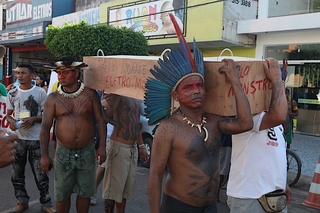
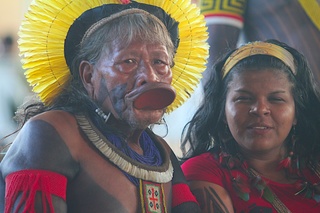
    O Acampamento Terra Livre 2010 teve início nesta segunda-feira, 16, em Campo Grande, Mato Grosso do Sul(MS), com uma coletiva de imprensa. Os organizadores e lideranças indígenas presentes puderam expor os principais pontos a serem discutidos durante todo o evento, que segue até o dia 19 de agosto com uma extensa pauta abarcando questões como saúde, educação, demarcação de terras indígenas, criminalização de lideranças, discriminação, entre outros.

    As principais lideranças do movimento indígena nacional fizeram parte da mesa e apresentaram, de forma breve, as principais reivindicações . Romancil Kretã, liderança Kaingang do Paraná soube sintetizar as razões do evento estar acontecendo em Campo Grande. "Este é o estado do Brasil que mais discrimina os povos indígenas e precisamos mostrar esta realidade para a sociedade! Somos estrangeiros dentro de nossas próprias terras, pois a Constituição brasileira não é respeitada e as leis que surgem só marginalizam os povos indígenas!", declarou.

    Irajá Pataxó falou em nome dos povos indígenas do nordeste e ressaltou o problema da criminalização. "Somos os donos desta terra e eu venho da Bahia, um estado onde três lideranças indígenas estão presas pro lutar por suas terras e por seus direitos! Nosso povo precisa de dignidade!"

    A questão da demarcação de terras dos povos indígenas no Mato Grosso do Sul teve bastante destaque em todas as falas. "Este é um estado em que um boi vale mais que uma criança, um lugar em que a cana vale mais que todo o povo indígena reunido!", destacou Anastácio Peralta, liderança Guarani Kaiowá. "Os grandes empresários pisam em nós, mas nós não podemos nos encolher diante destas coisas, precisamos lutar!", completou.

    Durante a coletiva muitos jornalistas questionaram se houve avanços na questão indígena durante a gestão do presidente Lula. Os indígenas foram enfáticos que em relação à demarcação de terras, foi muito aquém do esperado. "É claro que houve conquistas, mas quero ressaltar que foram conquistas do movimento indígena. Mas no que tange à demarcação de terras, não estamos nem um pouco satisfeitos!", destacou Kretã.

    O acampamento segue até o dia 19, quando os indígenas farão um documento com as principais reivindicações e que deverá ser entregue aos cadidatos à presidência da República.

    Read More
  • 16/08/2010

    Concedida liberdade a cacique Babau e seus irmãos Givaldo e Glicéria

    O Juiz de Direito da Comarca de Buerarema (BA), Antônio Carlos de Souza Hygino, concedeu hoje (16) liberdade a Rosilvado Ferreira da Silva, mais conhecido como cacique Babau, e a seus irmãos Gilvado Jesus da Silva e Glicéria Jesus da Silva. A decisão revoga os mandados de prisão expedidos contra outros indígenas da Comunidade Tupinambá da Serra do Padeiro.


    O habeas corpus deferido foi impetrado pela Fundação Nacional do Índio (Funai) em 26 de julho. Com a decisão, Hygino determina que o diretor do Conjunto Penal de Jequié, município baiano, coloque em liberdade Glicéria. O mesmo deverá acontecer com Rosilvado e Givaldo presos no Complexo Penitenciário Lemos de Brito, em Salvador.


    Com esta decisão, o segundo HC impetrado pela Funai, bem como os habeas corpus impetrados pela Assessoria Jurídica do Cimi e pela indígena Pataxó Hã-Hã-Hãe, Patrícia Rodrigues dos Santos Moraes, devem perder o objeto.


    Aguarda-se que em poucas horas, Rosilvado, Givaldo e Glicéria sejam postos em liberdade.


    Entenda o caso


    Babau foi preso na madrugada do dia 10 de março, enquanto dormia em sua casa com a mulher e o filho. A ação truculenta da Polícia Federal aconteceu de forma ilegal, com evidente violação de residência, prisão por policiais federais não identificados e demora na apresentação da liderança à delegacia. A prisão aconteceu às 2h30, mas Babau só chegou à delegacia pela manhã apresentando hematomas no rosto e dores nos rins.


    O irmão de Babau, Givaldo Jesus da Silva, também estava preso preventivamente por decisão do juiz federal Pedro Holliday. Ele foi detido em frente à garagem onde entregava seu carro para consertos, em Buerarema.


    Já Glicéria Jesus da Silva foi detida quando desembarcava no aeroporto de Ilhéus, no dia 2 de junho. Na ocasião, ela tentava retornar á sua comunidade após uma visita com o presidente Lula em Brasília. Na ocasião, ela foi presa junto com seu filho de apenas dois meses.


    Trancafiados


    Desde a prisão da importante liderança Tupinambá, os indígenas do Sul do estado vivem amedrontados e trancafiados em suas aldeias. Os alunos da comunidade Serra do Padeiro, onde cacique Babau mora, estão sem ir às aulas ou à cidade desde março quando Rosivaldo foi retirado de sua casa, durante a madrugada, pela Polícia Federal. Têm sido constantes as ameaças de fazendeiros, pistoleiros e até de populares aos indígenas, inclusive nas salas de aula.

    Read More
  • 16/08/2010

    Report no. 921: Indigenous leaders call for improved care and respect

    The Indigenous Karaja and Kanela Commission attempt in vain to speak with the president of Funai.

     
    A commission formed by 12 indigenous leaders of the Karaja and  Kanela peoples of Araguaia has been in Brasilia since Monday (July 5) to speak with the president of the National  Foundation of Indigenous Affairs (FUNAI), Márcio Meira. The group seeks to discuss Decree 7.056/09, which restructures the agency. The Karaja live in Ilha do Bananal, Tocantins and the Kanela of Araguaia  live in the region of Sao Felix do Araguaia, in Mato Grosso.
    The trip to the Brasilia headquarters of Funai  is to portray the various problems faced by communities with changes in to services provided by the agency. These services were previously provided through the Araguaia Regional Administration, located in St. Felix, which also served the people of the Ilha do Bananal region. However, since last year, when the decree was signed by the president, the calls have been paralyzed.


    Regional administrations, according to the decree, will be eliminated and  regional coordinators created. The group calls for a coordinating body that would be responsible for services in the region, located at Palmas (TO) also serve communities of more than 28 municipalities. "It is practically impossible, because this coordinating body will not meet so many people, in addition, the municipalities are very far apart," they say.
    "After this decree many Indians have died without treatment, due to alcoholism and other problems that affect our community as we are without any source of income, such as farming project," said John Werra, the people Karaja.
    Also according to the natives, the end of the regional administration has caused a series of raids in the region of Banana Island. The invaders come steal the land and sell fish, turtles and other natural resources found in the region.
    It’s been six months and technical staff of FUNAI does not appear in the region, so the group has come for a response from the body. "We want them to resolve the situation, because lives are at stake," said the representative of the people Kanela lenim Werra, who is president of the Association Wyky Mahadu Iny, JK Village.
    They also criticize the process of construction and approval of the decree. "The whole process was flawed because it did not hear the people, not done a proper study to end with the authorities and create coordination. Everything was done from above, a total lack of consideration of the country’s president with indigenous peoples, "said Edmilson Moreira Karaja.
    Meeting in St. Felix
    While the group that came to Brasília can not talk with Marcio Meira and is greeted with fear and unwillingness by the Foundation staff in Brasília, Secretary of the President of FUNAI reported that it will meet tomorrow (9), Pedro Casaldaliga, in Sao Felix do Araguaia, in Mato Grosso.
    Terena leaders denounce attacks on the MPF of Mato Grosso do Sul
    In June this year Terena indigenous leaders of the people of the Indigenous Land Cachoeirinha, municipality of Miranda, sent letter to the Federal Prosecutor of Mato Grosso do Sul denouncing the numerous attacks that have been victims since regained part of their traditional land, known as Tumuné Kalivono on October 22, 2009.
    08/07/2010 – 19:40 – Report No. 921: Indigenous leaders call for better care and respect

    "Since the expulsion from our land resumed, this action made by the Federal Police and Military Police of Mato Grosso do Sul, we suffered a series of threats and intimidation of several people living in Miranda," say the leaders in the document.
    Among the reported assault are the deterioration of traditional territory, the removal of timber from legal reserve which is in the area claimed by the community, harassment and attacks on indigenous people.
    On June 16, Lindomar Terena Terena and Germano walked the bike through the city center, where, according to the community, were approached and chased by a local resident who was also on a motorcycle and the vehicle went on to play against them .
    There are several situations of discrimination and disrespect experienced by the Terena who live in Miranda. Since the withdrawal group Tumuné Kalivono, the community is threatened and assaulted with foul language.
    Also according to the leaders, on the expulsion of its people, an agreement was signed between indigenous and farmer who claims to be the owner of the area claimed by the group, it would return the belongings of the Indians who could not be evacuated at the time of withdrawal from the group ranch.
    "The farmer said he would leave our things at the farm gate. However, after several days, nothing happened. We were simply informed that the agreement will not be fulfilled and that we will not back our horses, cows, stoves and documents ", say.
    To the leaders actions are strategies to intimidate the community, which has jeopardized the peace and integrity of its people. They ask for the steps to establish the criminal acts committed against the people and to curb the threats that are imposed.

    Read More
  • 16/08/2010

    Fórum Social das Américas: A Vida pede passagem

    Quando o cacique Ava Guarani, Ernesto, timidamente começou a agitar-se, numa pequena tenda do Fórum Social das Américas, o coração do continente pareceu acompanhar o ritmo cadenciado da sabedoria e espiritualidade milenar. Ele invocou todas as forças pelo reconhecimento do direito dos povos originários, mas invocou em especial as energias de Tupã e dos espíritos por todas as formas de vida acolhidas e alimentadas pela mãe terra e a natureza.


    “Não devemos sentir vergonha de nossa cultura. Vamos erguer nossa voz bem alto e nossas danças para ouvir e receber a sabedoria”.  A voz e invocação Guarani de Ernesto se espalharam por todos os espaços, “carpas, bloques, aulas, planta baixa, planta alta, polideportivo, cantinas…” à sombra das árvores, nas ruas e calçadas por onde fluem os milhares de participantes desse Fórum. Centenas de atividades autogestionadas e cogestionadas, que terminaram com expressivos painéis e apresentações culturais no final do dia e à noite. Rigoberta Menchú, indígena da Guatemala, prêmio Nobel da Paz, juntamente com as vozes de Bolívia, Equador e Paraguai, trouxeram importantes elementos sobre o “bem viver e os direitos da mãe terra”. As reflexões e debates são feitos na memória de milhares de heróis que neste continente construíram grandes civilizações e derramaram seu sangue pela vida em plenitude. A recuperação dessa sabedoria impulsiona, inspira e alimenta a esperança na construção desse novo projeto civilizatório.


    A centralidade da vida


    Uma das marcas desse Fórum é a centralidade da vida. Ela se agita, grita, apresenta em sua diversidade ameaçada, em sua espiritualidade reprimida, em sua pluralidade condenada… “Para o capitalismo o que importa é o capital, o lucro, para o socialismo é o ser humano e para nós o mais importante é a VIDA”, disse David Choquehuanca, chanceler, indígena boliviano, em sua fala sobre o bem viver e os direitos da mãe terra.


    Rigoberta Menchú chamou atenção para as conseqüências desastrosas do modelo civilizatório colonial e capitalismo para os povos nativos e originários do continente, que está provocando uma deterioração da vida comunitária, destruição de milhares de formas de vida, provocando uma decadência social, material e espiritual. Diante desse quadro de destruição e morte convoca todos os povos da resistência, movimentos sociais, lutadores e lutadoras do continente para a construção de uma agenda comum que possibilite avançar na construção dessa alternativa civilizatória, com profundo respeito à diversidade e sem sectarismos. Irene Leon falou da primavera política que vive Latinoamerica, destacando “a construção de relações harmoniosas e de interdependência entre o vivente: seres humanos entre si; seres humanos e natureza… destaca a centralidade da reprodução ampliada da vida”.


    Por isso se insistiu na necessidade de mudar o processo de produção, não pensando na acumulação, mas produzir para a vida.


    O grito dos afogados de Itaipu


    Uma das mesas de debate foi sobre “os impactos de Itaipu sobre as comunidades Ava Guarani. Várias lideranças Guarani, cujos tekoha – terras tradicionais – foram tomadas pelas águas da hidrelétrica de Itaipu, trouxeram seu clamor diante da criminosa omissão e desrespeito da empresa Itaipu e do governo em garantir terra às 38 comunidades desalojadas com a formação do lago. Já se passam trinta anos e as famílias continuam sofrendo na diáspora forçada provocada pela Itaipu. As lideranças não apenas veem denunciar essa violação de seus direitos, mas pedem apoio de todos os povos do continente para sua decisão de retornar à região do rio Paraná.


    Em depoimentos emocionados os expulsos pela Itaipu contam as três décadas de sofrimento, perambulando pela região, ou confinados a alguns nos mil hectares que Itaipu comprou, em terra seca, os Guarani que tinham como habitat as beiras do rio Paraná. Essa situação teve um enorme impacto sobre milhares de Guarani expulsos pela Itaipu: desde a destruição das relações sociais e familiares, até os inúmeros suicídios. Continuam na dispersão, mas tem um grande sonho e uma determinação – voltar a reagrupar as mais de 500 famílias Ava Guarani paranaenses e retornar à região donde foram expulsos.


    Foi lembrado que do lado brasileiro a história não foi muito diferente. Depois de pressionados pelo avanço célere da agricultura mecanizada, do agronegócio, as comunidades Guarani foram sendo dispersadas e expulsas. De um lado e outro do rio Paraná eles foram brutalmente tangidas pelas frentes de expansão econômica e interesses energéticos. Depois de três décadas continuam clamando por justiça, que é fundamentalmente a garantia de terras onde possam continuar vivendo como povo Guarani.


    Neste debate proposto pela Comissão Nacional de Pastoral Indígena (Conapi) Irmã Mariblanca fez uma detalhada exposição sobre o marco legal dos direitos indígenas, desrespeitados pela Itaipu, e as graves conseqüências para o povo Ava Guarani.


    No final do dia houve um dos mais concorridos encontros do Fórum, onde compareceu o presidente Lugo, que poucas horas antes havia retornado ao país, após tratamento de saúde realizado no Brasil. Em saudação emocionada, agradeceu a todos destacando a importância desse momento para o fortalecimento do processo de mudanças no Paraguai.


    Egon Heck

    Povo Guarani Grande Povo

    Assuncion, 14 de agosto de 2010

    Read More
  • 16/08/2010

    Violence against Indigenous Peoples: indices continue to be alarming

    CIMI releases Report on Violence Against Indigenous Peoples in Brazil.

    Data references calendar year 2009


    There are 60 murder cases, 19 suicides, 16 cases of attempted murder, and the list goes on. These are just some of the critical data that will be presented by the Indigenous Missionary Council (CIMI) through the Report on Violence Against Indigenous Peoples in Brazil – 2009. Much information is comparable to the 2008 report, which does not diminish the gravity of the matter, because the numeric repetition only confirms the quotidian violence experienced by indigenous peoples in all regions.

     
    On July 9, Cimi presents one more alarming report on the violence suffered by indigenous peoples in the country. The launch of the publication will be at the National Conference of Bishops of Brazil (CNBB), at 15:00 with the presence of the general secretary of the CNBB, Dom Dimas Lara, Ph.D. in anthropology from the PUC-SP, research coordinator Lucia Helena Rangel, CIMI president Don Erwin Kräutler, and vice president and legal counsel Roberto Antonio Liebgott.

    Varied forms of  Violence
    As stressed in his introductory text, Roberto Liebgott notes that the Report demonstrates "omission as the political option of the federal government in relation to indigenous peoples". This attitude is implicit in different forms of violence, such as non-demarcation of land, lack of protection of indigenous lands, neglect in the areas of health and education, intimacy with the execution of leaders, attacks on encampments and other aggressions by security agents, attacks on indigenous peoples in situations of isolation, torture by federal police and suicides among others.


    The cases of violence against indigenous peoples are not ceasing. In the report, which covers data for the year 2009, once again calls attention to the concentration of rights violation cases in Mato Grosso do Sul, especially those related to the Kaiowá Guarani people. In this state, where the second largest indigenous population of the country lives, more than 53,000 people, the constitutional rights of these peoples are more than ignored.


    In past year alone, 33 murders of indigenous persons occurred in MS, which represents 54% of the total of 60 cases presented in the report. Such occurrences are characterized by Iara Tatiana Bonin,  PhD.Ed., as institutional racism. "The systematic violence recorded in recent years permits the assertion that a type of institutional racism is configured in this state, materialized in actions of civil groups and omissions by public powers".


    The Report further indicates the conflicted situation in which the indigenous people of southern Bahia live. In the region it is easy to verify a growing process of criminalization of leaders and intensified actions against indigenous peoples. In 2009, five indigenous members of the Tupinambá community of Serra do Padeiro were captured and assaulted during an action by Federal Police. During the action they received electric shocks in the dorsal and genital regions.

     
    High indices of violence are still registered in refeerence to assaults on indigenous patrimony caused by large projects of the federal government. The works range from small hydropower programs for ecotourism, gas pipelines, mineral exploration/exploitation, railways and waterways. These projects impact indigenous territories and affect the lives of diverse peoples, including those who have little or no contact with surrounding society.


    An example of such works is the Belo Monte hydroelectric, planned for the state of Pará on the Xingu river. The project advanced by the government as a source of development, will in fact bring disastrous and irreversible damage to the environment and communities in the region. Numerous specialists and social movements have pointed to the endless number of irregularities involving the work, such as failure to comply with Convention 169 of the International Labour Organisation (ILO), which guarantees the right of the people to be heard in the case of projects that affect them.


    Methodology and purpose
    The research methodology employed is the same utilized in previous years: taking as source, news reports carried in newspapers, magazines, radio, internet sites, in addition to systematic records kept by the regional staff teams of  CIMI. According to Professor Lúcia Rangel, "It is not possible to verify a diminution of  conflicts and situations of violence, even if some numbers are lower than those recorded in previous years". She also emphasizes that the report does not cover all cases and only reports cases of record that were possible to obtain during the calendar year.

    In order to prevent  the reality of violence against these people becoming trivialized, CIMI makes explicit reporting of these aggressions to the public, to organizations in defense of human rights – at the national and international level – legislators, judges and authorities. And, as Liebgott states, the conviction of CIMI is that this entire reality must be confronted and those responsible denounced.

    to download the complete report, click here

    Read More
  • 16/08/2010

    Letter to UN special rapporteurs denouncing criminalization of Tupinambá

    Official Communication JG/RJ no.***/10


                                                                                                    Rio de Janeiro, *** of 2010


    Mr. James ANAYA

    UN Special Rapporteur on the situation of Human Rights and fundamental freedoms of the Indigenous Peoples


    Mr. Manfred NOWAK

    UN Special Rapporteur on torture and other cruel, inhuman or degrading treatment or punishment


    Ms. Margareth SEKAGGYA

    UN Special Rapporteur on the situation of Human Rights Defenders


    Messers. El Hadji Malick SOW,  Shaheen Sardar ALI,  Roberto GARRETON, Vladimir TOCHILOVSKY , Mads ANDENAS

    Working Group on Arbitrary Detention


    Office of the High Commissioner for Human Rights

    The United Nations (UN)

    CH-1211

    Geneva, Switzerland


    Via electronic mail: [email protected].


    Ref: Information about illegal arrest of indigenous leader of the Tupinambá people and about five Tupinambá indigenous people, victims of torture caused in an operation of repossession carried out by Federal Police agents, state of Bahia, Brazil.

    Esteemed Special Rapporteurs,


    The Indigenous Missionary Council (CIMI) and Global Justice hereby provide information about the illegal arrest of Rosivaldo Ferreira da Silva, Cacique Babau, on March 10, 2010, and the torture suffered by Tupinambá indigenous people  Ailza Silva Barbosa, Alzenir Oliveira da  Silva, Calmerindo Batista da Silva, Mário Oliveira Barbosa, José Otávio de Freitas, on June 2, 2009, in the state of Bahia.


    Arrest and assault of Indian leader and human rights defender Cacique Babau in March of 2010
    In the early morning hours of March 10, 2010, five federal police, heavily armed, broke into and invaded the home of Rosivaldo Ferreira da Silva, Cacique Babau, in the Tupinambá community of Serra do Padeiro, state of Bahia. The arrest warrant was not presented by the police. According to his family, at the time of his arrest, Babau was violently assaulted and threatened with death. The police used extreme physical force to immobilize the Cacique who believed he was facing gunmen, because the agents were camouflaged, with their faces painted black, did not identify themselves and did not present an arrest warrant, in addition to voicing threats and curses. Several pieces of furniture in the house were broken. For the community, through the conduct of the police the impression that remained was the sense that they intended to take Babau without anyone knowing, in that they acted during the pre-dawn hours and after entering the house, closed the door.


    The action of the Federal Police occurred around 2:40 in the morning, though the agents only arrived with Babau at the police precinct of the municipality of Ilhéus between 6:30 and 7:00 in the morning. In his deposition, he said that the police had stopped for food at a place known as "Posto Flecha" and at another place, where there were trucks and deactivated winches to await sunrise and to be able to justify the arbitrary action they had conducted.

     
    On March 11, an anthropologist from the Ministério Público Federal visited Cacique Babau in the prison and said the leader was limping with his right eye swollen, experiencing pain in the hip and had not received medical attention. Despite this, the superintendent of the Federal Police in Bahia, José Maria Fonseca, said the Cacique would have had a forensic examination and no sign of torture or ill treatment in prison was indicated
    [1]. 

    On March 12, a committee formed by the undersecretary of promotion and defense of human rights, Perly Cipriano; the director for defense of human rights, Fernando Matos of the Special Secretariat for Human Rights of the Presidency of the Republic; state representatives Yulo Oiticica and Bira Coroa and a representative of the Secretary of Justice of the state of Bahia tried to visit Cacique Babau in the superintendencia of the Federal Police[2].  Arriving there, they were informed by the Regional Delegate José Maria Fonseca who had already been petitioned for new preventive arrest against the leader and stated: "He is not going to leave here"[3]. The group was prevented from visiting Cacique Babau. The Superintendent of the Federal Police of Bahia only authorized Perly Cipriano and Fernando Matos, SEDH / PR, to visit the leader[4].

     
    Givaldo Ferreira da Silva, brother of Babau, was arrested on March 20, by unidentified agents of the FP on a public thoroughfare.


    There are now eight police inquiries of the Federal Police of Ilhéus, in which Cacique Babau is being investigated
    [5]. The Ministério Público Federal and the National Foundation for Indigenous Affairs (FUNAI) filed for habeas corpus soliciting the immediate release of the leader. One of these was unknown by the 3rd Jurisdiction of the Federal Regional Tribunal (TRF) in the 1st  Region in 1.6 HC no. 0017707-64.2010.4.01.0000), which is the court that will judge all HCs. Two are at the point of being decided, that of no. 0014723-10.2010.4.01.000, authored by Funai – which is also convinced that the allegations incriminating Babau have no foundation to justify his arrest – and no. 0017705-94.2010 .4.01.0000 [6], authored by MPF / Bahia that also benefits Givaldo and the others. A fourth HC (0013864-91.2010.4.01.0000), also authored by MPF / BA is under analysis by the Regional Prosecutor of the Republic for an opinion.


    However, on April 20, one of the injunction petitions was denied and Babau remains detained in the maximum security unit of Mossoró-Pernambuco
    [7].

    Transfer of Cacique Babau to maximum security prison
    The Cacique Rosivaldo Ferreira da Silva ("Babau") and his brother, Givaldo Jesus da Silva, in preventive detention pending decision by federal judge Pedro Holliday, of Ilhéus, were transferred on April 16 to the federal penitentiary in Mossoró, Rio Grande do Norte. The Federal Police in Salvador, where both were being held, feared demonstrations against his incarceration, with protests against the continued imprisonment of Babau and Givaldo, requiring transfer, which was granted by the judge, despite the contrary opinion of the MPF/BA.

    The Federal Maximum Security Prison of Mossoró houses 83 inmates from other jails in the country, accused of narcotics trafficking, conspiracy, homicide and assault, among other crimes, and is more than two thousand kilometers from the Tupinambá Lands in the South of the state of Bahia. Babau and Givaldo are not condemned, but respondents in investigations triggered by complaints from farmers and others who oppose the demarcation of the Tupinambá territory. Even the Ministério Público Federal denies the imputation of the accusations against them – and other Tupinambá leaders – by the Federal Police, and have filed three habeas corpus to free them. FUNAI, in the habeas corpus filed on behalf of Babau, insists on compliance with the sole paragraph of Article 56 of Law No. 6.001/73, the Indian Statute, which allows for indigenous persons to remain at the disposition of the court at the Funai post closest to the indigenous land of origin.
    The transfer of these two important indigenous leaders of the country to a maximum security federal prison constitutes one more authoritarian action by the Federal Police and reinforces the conviction that such arrests are eminently political in nature, seeking the criminalization of defenders of human rights. The transfer of Babau and Givaldo occurred on the eve of April 19, the date on which the Day of the Indian is commemorated in Brazil, to clearly prevent any expression of support for the leaders and to humiliate the President of the Republic, who on that that date was to have been in Salvador, participating in the 12th UN Congress on Crime Prevention and Criminal Justice.


    Torture of five indigenous persons in May of 2009
    On May 26 of 2009, the Tupinambá people retook possession of their traditional territory, recognized by the National Foundation for Indigenous Affairs (FUNAI), situated on the Santa Rosa farm, illegal property of the farmer José Elias. On the day of the retaking, they found a body in an advanced state of decomposition, and immediately reported the fact to the Federal Police. Hours later, federal police and the owner of the farm arrived together at the site, determining that twelve of the indigenous persons were to be taken to the headquarters of the Federal Police to provide depositions. Being members of the community, they were primary suspects in the death
    [8]. 
    Upon arriving at the federal police station of Ilhéus, Fabio Araújo Marques, the officer responsible, threatened the indigenous group and told them never to return to the farm. As they did return, on May 30, 2009, the Federal Police and the proprietor returned to the area. At that time, federal agents arrived firing at the community and setting fire to the homes and personal belongings with the main objective of frightening the Tupinambá. After the departure of the police, the indigenous people returned to the headquarters of the village and remained in the abandoned installations that had not been burned
    [9].
    On day 2 of June, the Federal Police and the proprietor of the farm  returned together to the site and this time, police agents acted in a more aggressive manner, capturing and torturing five indigenous people who were unable to flee. They were: Ailza Silva Barbosa, Alzenir Oliveira da  Silva, Calmerindo Batista da Silva, Mário Oliveira Barbosa, José Otávio de Freitas.
    On that occasion, the police used pepper spray in the eyes of the indigenous persons captured, causing intense pain, according to the report compiled by the Federal Prosecutor of the Federal District, Dr. Luciana Loureiro. They also complained of severe back pain and burns caused by "taser guns", and by beatings while still taken prone and handcuffed. According to the depositions provided, all were kicked, punched, slapped, cursed, constantly threatened with death and three of them received [electrical] shocks to the genitals
    [10].


    At the Federal Police station of Ilhéus, the group remained handcuffed for more than nine hours
    [11]. On this occasion, once again officer Fábio Araújo Marques made threats regarding the return of indigenous people to the farm, even though this is Tupinambá territory.


    With respect to indigenous arrest and torture, Ailza Silva Barbosa reported that police threatened to cut her throat and hair with the knife they carried
    [12]. In the police headquarters, Ailza stated that a police woman, in order to humiliate her entered the bathroom with her and threatened to take her clothes showing her gun in the mirror pointed in her direction[13].
    After the illegal arrest and torture, the five indigenous persons were driven to the Civil Police in the town of Itabuna on 4 June, to register the crime, but the doctor only asked a few questions about what they were feeling, without so much as performing a clinical examination
    [14]. In Brasilia, the Institute of Forensic Medicine of the Federal District, under requisition by Federal Prosecutor Dr. Luciana Loureiro, conducted more detailed examinations and the results of the examinations confirmed the denunciations. The inquiry however, conducted by the same police chief who coordinated the action of the agents, concluded that there was no instance of torture. None of the agents was removed from duty during or after the investigations.

    Antecedents 
    The Tupinambá initiated the struggle for the constitutional right to their lands in 2000. Since then, they have led a series of retakings, both near the coastal town of Olivença, in southern Salvador, as in the interior of the state, in a mountainous region of old cocoa plantations. Some communities have settled on lands that were utilized, with support from local politicians and entrepreneurs, for illegal logging, which led to a series of confrontations with the Federal Police.
    In October of the year 2008, agents of the Federal Police who tried to stop the indigenous leader Rosival Ferreira da Silva, used excessive force against his family and other members of the Tupinambá community of Serra do Padeiro. His brother Jurandir was detained and beaten on October 23 of 2008 and the situation in the region, since then, is very tense.
    The Federal Police entered the village on 20 October of 2008 to inspect areas that were about to be the subject of an eviction order, which generated new conflicts in the region. According to police, the Tupinambá had ambushed them during the inspection, but the community maintains that the police fired at their members when they conducted officers to the center of the village. By the end of the confrontation, three community members had been injured by rubber bullets.


    The Federal Police reentered [the village] with a large contingent on the morning of 23 October of 2008. More than 100 police, in more than 30 vehicles and a helicopter surrounded the area, preparing to apprehend Babau, who they accused of preparing the "ambush". During the operation, the police used tear gas and injured more than a dozen Tupinambá. This violent attack by federal police caused a response of outrage in national society, including a campaign led by Amnesty International.
    In this action, denounced by the National Commission on Indigenous Policy, nobody has been held accountable for the excessive and unlawful acts, creating a climate of impunity in relation to abuses by authority of agents and delegates of the Federal Police. The representative of the Federal Police Department in meeting with the National Committe on Indigenous Policies (CNPI) late 2008 even mocked the report by the indigenous people. (Despite the change of the Superintendent of the Federal Police, after the meeting with parliamentarians and human rights entities with the Minister of Justice, the same officer continues to be active in the region, as well as the federal police agents involved the episode of the torture in June of 2009).


    The arrest of Babau, a leader who represents the circa 130 families living in the village of Serra do Padeiro (municipalities of Buerarema, Una and Olivença) occurred at a moment of significant tension.


    Babau is an important leader of the Tupinambá people, who have several other caciques. The exacerbation of violence against this people, like this arrest, has been ongoing since the publication of the identification report for and demarcation of the Tupinambá indigenous land, prepared by a technical working group constituted by the FUNAI, in compliance with the Federal Constitution, the Indian Statute and Decree 1775/96. Since then the Tupinambá have been the target of intense accusations, threats, attempted homicide, in addition to suffering an intense discriminatory campaign by the local political and  economic class, which historically invades and destroys the Tupinambá Land
    [15].

     
    Recommendations
    The grave violence in the countryside – especially that suffered by the indigenous people of Brazil – originates through the lack of accountability of public officials who violate rights; through the criminalization of leaders and through failure to implement the constitutional right to demarcation of indigenous territory, recognition of the value, of the dignity and of the rights internationally and constitutionally guaranteed to the indigenous peoples.
    Unfortunately attitudes like those of the Federal Police corroborate  the illegality proceeding from economic groups, squatters and the large scale landowners (latifundiários). Within its partiality, they fortify the criminalization of the leaders and peoples, and, consequently the perpetuation of violations.
    Given, therefore, the denunciations of torture and human rights violations committed by agents of the Brazilian State, CIMI and Global Justice are calling for adoption of the following recommendations to the Brazilian authorities: 


                a) Carry out a serious and effective investigation so that the agents of crimes of torture committed against Ailza Silva Barbosa, Alzenir Oliveira da Silva, Calmerindo Batista da Silva, Mário Oliveira Barbosa, José Otávio de Freitas can be prosecuted and held accountable by the Judiciary;
               

                b) Immediate granting of liberty for the defender of human rights  Cacique Babau – Rosivaldo Ferreira da Silva – and Givaldo Jesus da Silva, in light of the illegal arrest;


                c) Immediate guarantee of possession of territory to the Tupinambá people, as set forth in the Brazilian Federal Constitution, upon completion of the demarcation process with the competent organs and its protection;


                d) Guarantee of the physical invulnerability of the Tupinambá People;

                e) Continued training in Human Rights for police agents who deal with indigenous peoples and other ethnic minorities.

    We thank you in advance for the attention given to this communication and we make ourselves available to provide further clarification. Any information may be provided by the NGO Justiça Global by telephone +55 21 2544 23 20, fax +55 21 2524 84 35; or via email [email protected]


    Sincerely,
    Saulo Ferreira Feitosa / Eden Pereira José Magalhães
    Indigenous Missionary Council (CIMI)

    Andressa Caldas / Sandra Carvalho / Luciana Silva Garcia / Tamara Melo / Renata Lira
    Global Justice


    [1]  "SEDH visited the jailed Cacique in the superintendence of the Federal Police in Bahia". Agência Brasil, 12 March, 2010. Available at em http://www.agenciabrasil.gov.br/web/ebc-agencia-brasil/pagina-inicial/-/journal_content/56/19523/170050

    [2]  Ibid

    [3]  Office of the President of the Republic. Special Secretary of Human Rights. Council for the Defense of Human Rights of the Human Person. Act of the 198th Ordinary Meeting of March 16 of 2010.

    [4]  Ibid

    [5]  Inquéritos Policies (Police Inquiries) n.º2.362/2008; 2-127/2005; 2-491/2007;  2-090/2008;  2-172/2009;  2-191/2009 ; 2-192/2009; 2-202/2009; 32/2010-2009, all Federal Police stations in Ilhéus, Bahia. For consultation, http://www.trf1.gov.br/Processos/ProcessosTRF/

    [6]  This HC is authored by the MPF/Bahia occurs in secret from the court, to benefit Babau and the four other Tupinambá leaders whose arrests were also ordered by the federal judge of Ilhéus/BA.

    [7]  The habeas corpus no. HC 0013864-91.2010.4.01.0000  was adjudicated on 20 April of 2004, by the Third Jurisdiction of the Federal regional Tribunal of the 1st region. For more information see: http://www.trf1.gov.br/Processos/ProcessosTRF/

    [8]  Statement provided to Federal Police on 08/06/2009 by Calmerindo Batista Da Silva, Ailza Silva Barbosa, Alzenir Oliveira da Silva.

    [9]  Ibid

    [10]  Statement provided on 08/06/2010 by Calmerindo Batista Da Silva, Ailza Silva Barbosa, Alzenir Oliveira da Silva, José Otávio de Freitas, Mário Oliveira Barbosa.

    [11]  Ibid

    [12]  Statement provided on 08/06/2009 Ailza Silva Barbosa

    [13]  Ibid

    [14]  Calmerindo Batista Da Silva, Ailza Silva Barbosa, Alzenir Oliveira da Silva, José Otávio de Freitas, Mário Oliveira Barbosa

    [15]  In Novemeber of 2009, an important magazine of national circulation, the Revista Época, published an article about the situation of the Tupinambá people and the actions of Cacique Babau, indirectly qualifying him as a dangerous and subversive leader. For the full article see:http://revistaepoca.globo.com/Revista/Epoca/0,,EMI105789-15223,00-O+LAMPIAO+TUPINAMBA.html

    Read More
  • 16/08/2010

    Começa hoje Acampamento Terra Livre

    O Acampamento Terra Livre (ATL), evento principal do movimento indígena no Brasil, será instalado nesta segunda-feira (16), e ficará montado até quinta-feira, 19 de agosto, na Aldeia Urbana Marçal de Souza, em Campo Grande, Mato Grosso do Sul. Para apresentar a programação e fazer um balanço preliminar da situação dos direitos indígenas, haverá uma entrevista coletiva à imprensa hoje, na tenda da Plenária do evento, às 15h30. Estarão presentes representantes das organizações indígenas regionais que integram a Articulação dos Povos Indígenas do Brasil (APIB) e membros do Fórum em Defesa dos Direitos Indígenas (FDDI).


    Cerca de 800 indígenas de todo o país devem se reunir no acampamento. O objetivo é analisar a atual situação dos direitos indígenas, a partir de ações e resultados das edições anteriores do ATL. A idéia é formular, por meio destas experiências e das diferentes realidades dos indígenas representados no acampamento, propostas comuns para uma nova política indigenista no Brasil, analisando os avanços e as reivindicações não atendidas pelo Estado brasileiro. As demandas junto ao governo federal serão reunidas em uma proposta de programa de governo para os Povos Indígenas.


    A pauta do ATL reunirá as principais questões que afetam os povos indígenas. Entre os temas que serão discutidos estão: o impacto em terras indígenas de grandes empreendimentos, como as obras do Programa de Aceleração do Crescimento (PAC), hidrelétrica de Belo Monte e a Transposição do Rio São Francisco, entre outros; o direito à terra (demarcação, criminalização de lideranças, desintrusão, sustentabilidade); a reestruturação da Fundação Nacional do Índio (Funai), realizada sem a consulta prévia e informada aos indígenas como previsto na Constituição e na Convenção 169 da Organização Internacional do Trabalho (OIT); e as perspectivas da Articulação Nacional dos Povos Indígenas (APIB).


    Outros temas prioritários como o Estatuto dos Povos Indígenas, a Política Nacional de Gestão Ambiental e Territorial em Terras Indígenas (PNGATI), o GEF Indígena, a Secretaria Especial de Saúde Indígena e os Territórios Etnoeducacionais deverão ser tratados na perspectiva de pleitear e monitorar a sua implementação.


    O ATL acontece este ano em MS para mobilizar a sociedade, os meios de comunicação, nacionais e internacionais, e o governo para a situação crítica enfrentada pelos indígenas sul mato-grossenses, principais vítimas do conflito fundiário na região. Desde o início das demarcações de terras, as comunidades indígenas vivem em constante terror, ameaçadas e perseguidas pelos grandes proprietários rurais.


    O Acampamento Terra Livre (ATL) é uma realização da Articulação dos Povos Indígenas do Brasil (APIB), instância nacional que congrega as organizações indígenas regionais, e do Fórum em Defesa dos Direitos Indígenas (FDDI), entidade composta pelas organizações indígenas e entidades indigenistas e de apoio.


    Contatos:

    – Gustavo Macedo (Apib) – (61) 30435070/ (61) 81612500

    Email: [email protected]

    Blog: http://blogapib.blogspot.com


    – Cleymenne Cerqueira e Maíra Heínen (Cimi) – (61) 2106-1667 / 9979-6912

    Email: [email protected] e [email protected]

    Site: www.cimi.org.br

    Read More
  • 14/08/2010

    ”Lula será lembrado como o presidente que acabou com os povos indígenas do Xingu”

    “Os índios criaram uma nova visão sobre a própria vida, deixaram uma síndrome de autoflagelação e complexo de inferioridade e recuperaram o orgulho de pertencer àquele povo.” O pensamento é do bispo de Altamira, no Xingu, Dom Erwin Kräutler, uma das principais vozes a favor dos povos indígenas na América Latina. Em entrevista concedida à IHU On-Line, concedida pessoalmente, ele falou sobre a reafirmação da identidade indígena. “Eles, que eram sempre pisados, ergueram a cabeça e reconheceram que são filhos dessa terra e ninguém pode tirar isso deles.”

     

    O bispo de Altamira (Pará), nascido na Áustria, chegou ao Brasil na década de 1960 e logo abraçou a causa dos indígenas. Na última semana, ele esteve na Unisinos para um ciclo de palestras. Dom Erwin é presidente do Conselho Indigenista Missionário (Cimi).


    Confira a entrevista.


    IHU On-Line – Como é a atuação do Conselho Indigenista Missionário (Cimi) no Brasil, atualmente?


    Dom Erwin Kräutler – O Cimi foi fundado em 1972 por iniciativas de bispos que tinham povos indígenas em suas áreas eclesiásticas. Chegaram à conclusão de que a atividade pastoral junto a eles precisava ser assumida, ao invés de cada religioso fazer as coisas por sua conta. Temos de ter linhas, diretrizes e prioridades comuns. Naquela época, o Estado também tomou iniciativas, através do Serviço de Proteção ao Índio (SPI), que não agradava sempre à Igreja. Hoje, basicamente, o Cimi tem duas finalidades: uma delas é a presença real. Estamos no meio dos indígenas, no lugar onde acontece a história desse povo, através dos nossos missionários.


    O segundo ponto é a sensibilização da sociedade brasileira, que tem uma vertente no aspecto internacional. Não estamos apenas nos restringindo à causa indígena dentro do Brasil, mas na América Latina e no mundo inteiro. Entendemos que os povos indígenas do Brasil são irmãos dos índios de toda a Terra, que têm os direitos garantidos na Declaração Universal dos Direitos Humanos. Veiculamos informações para o mundo inteiro. Normalmente o contato é feito com a imprensa alternativa, embora, volta e meia, apareça algum fato relacionado aos povos indígenas na grande mídia.


    IHU On-Line – E entre as prioridades do Cimi está a violência contra os índios…


    Dom Erwin Kräutler – É o principal assunto. Estamos lutando contra a violência, mas é preciso perguntar o que há por trás dela. Não é como o caso de um cachaceiro que mata o outro em uma briga de bar. É na terra ou na falta dela que se fundamenta todo tipo de agressão contra os indígenas. São expulsos de suas terras, que acabam usurpadas. Quando falamos em violência, falamos de defesa dos direitos constitucionais, da terra, da cultura, da maneira de ser.


    IHU On-Line – O senhor pode nos falar sobre o caso de um povo indígena recém-contatado que pode ser levado para uma localidade do Maranhão?


    Dom Erwin Kräutler – Sobre esse caso específico não tenho nenhum detalhe no momento, o Brasil é muito grande. O Cimi é contra a transferência compulsória de um povo. Isso foi feito algumas vezes, inclusive durante a construção da Transamazônica, e, no geral, os integrantes acabam morrendo. São arrancados de seu habitat e não conseguem se adaptar. Faz parte da filosofia deles: “É a terra onde me criei, onde nasci, berço de nossos mitos e ritos, lugar dos nossos ancestrais.” E acabam morrendo, como os negros que viram escravizados da África, de uma saudade patológica.


    Além disso, eles não têm imunidade contra nenhum surto de doença. Mas existem na Amazônia povos encontrados recentemente e outros com contato esporádico, dos quais não se sabe praticamente nada. Ainda é impossível dizer quais as principais características e como vivem. O fato é que, quando se faz uma descoberta dessas, é um “deus nos acuda” nos meios que estão querendo se apropriar daquelas terras e das riquezas naturais existentes ali. O índio se torna um obstáculo, um empecilho e tem de ser eliminado. Para esses gananciosos e ambiciosos, índio é bicho do mato e não possui direitos.


    IHU On-Line – Como é a relação entre Cimi e Funai?


    Dom Erwin Kräutler – É complicada. O Cimi tem sua visão, filosofia, diretrizes, teologia e plano pastoral. A Funai é o órgão executor do governo federal e não tem filosofia própria, mas sim aquela que o atual presidente adota. Se atrai ao governo salvar os índios, é isso que a Funai se esforça para fazer. Se, no fundo, os mandantes dizem “tomara que os índios desapareçam”, a Funai também não vai se preocupar muito. Foi sempre assim. No tempo dos militares prevalecia a “incorporação dos silvícolas à identidade nacional”. Depois veio a nova Constituição, mas ficou só no papel. Nós não exigimos nada mais que o que está na Constituição, que é a carta magna do país, essa é a nossa luta.


    IHU On-Line – Às vésperas das eleições, quais as expectativas do Cimi quanto aos próximos anos? Algum candidato se mostra mais favorável às causas indígenas?


    Dom Erwin Kräutler – Os candidatos que aparecem mais à frente nas pesquisas não darão passos significativos, porque índio não atrai votos. Nenhum traz o compromisso de abraçar as causas indígenas. Nossa luta vai continuar. Os minoritários, que aparecem atrás, cutucam e colocam esse tema em destaque. Mesmo que não ganhem, vão aproveitar o palanque.


    IHU On-Line – Como o senhor vê a situação dos povos indígenas no Mato Grosso do Sul?


    Dom Erwin Kräutler – É terrível, a pior do Brasil. Foram expulsos, tiveram suas terras tomadas. Estão à beira da estrada ou em reservas tão diminutas que não há como sobreviver, estão encurralados. Instalou-se um pânico coletivo que chega ao ponto de os índios não quererem mais viver, apelando ao suicídio.


    IHU On-Line – Essa prática tem crescido entre os indígenas?


    Dom Erwin Kräutler – Não posso dizer que tem crescido, mas são muitos os casos, inclusive entre os jovens. Eles não têm perspectivas para sobreviver como povo.


    IHU On-Line – E os índios gaúchos, como se encontram?


    Dom Erwin Kräutler – O Rio Grande do Sul também tem seus problemas ligados às causas indígenas. Há gaúchos sensíveis, mas também aqueles que rezam a mesma cartilha de que índios são bugres, vagabundos, cachaceiros, mas nunca se perguntam: “o que aconteceu com esse povo?” De modo geral, tudo isso está relacionado à terra. Quando aqui se levanta questões a respeito da terra indígena, há muita contrariedade e hostilidade. Novamente dizem que os índios não precisam de tanto espaço, pois não produzem. A ideia do branco, da sociedade predominante, é que só tem direito de viver quem produz, o resto é supérfluo ou descartável. E os indígenas entram nessa categoria.


    IHU On-Line – Ao mesmo tempo em que há todo sofrimento entre os índios, o senhor afirma que houve uma reafirmação da identidade indígena. Como ocorre isso?


    Dom Erwin Kräutler – Em virtude dessa marginalização contra os povos indígenas, eles entranharam essa afirmação de que “são menos gente, uma categoria de pessoas que não têm direito a nada.” Entretanto, de repente, surgiu uma nova época em que eles caíram na real e se questionaram: “a final de contas, quem já estava aqui quando os outros chegaram? Quem tem cultura, uma língua e algo para contribuir para o mundo como um todo, inclusive, para o Brasil?” Criaram uma nova visão sobre a própria vida, deixaram uma síndrome de autoflagelação e complexo de inferioridade e recuperaram o orgulho de pertencer àquele povo. Os índios que eram sempre pisados ergueram a cabeça e reconheceram que são filhos dessa terra e ninguém pode tirar-lhes isso.


    IHU On-Line – E nesse momento, o que o senhor tem a falar sobre Belo Monte?


    Dom Erwin Kräutler – Se esse projeto for levado adiante, o Presidente Lula será lembrado como o presidente que acabou com os povos indígenas do Xingu. Não é verdade que está planejada apenas uma barragem, haverá outras. Todas as áreas indígenas do Xingu serão invadidas e os povos não vão sobreviver. Esse decreto é uma falácia. Quem deu o tiro de largada para essa monstruosidade será o responsável pela morte desses povos diante da história do Brasil e do mundo.


    Read More
  • 13/08/2010

    Jovens indígenas exercem sua participação em oficina promovida em Cuiabá (MT)

    Karine Alves, 18 anos, é indígena da etnia Guató, do Mato Grosso, e professora na aldeia Aterradinho, localizada no município de Barão de Melgaço, região sul do estado. Ministra aulas de 1ª a 4ª série, numa sala anexa da Escola Estadual Antônio João Ribeiro. “A escola não é indígena. Existe um plano para a construção da escola indígena, mas como a terra ainda não foi demarcada, não temos nossa escola”, lamenta.


    A reivindicação por uma escola diferenciada e de qualidade nas aldeias foi apontada por ela e também por outros 15 jovens presentes à segunda etapa do ciclo de oficinas voltadas a discutir os direitos e as políticas para as crianças e os adolescentes indígenas. A oficina ocorreu de 9 a 11 de agosto, em Cuiabá, e contou com a presença de 40 participantes indígenas entre professores, mulheres, lideranças e estudantes dos estados de Tocantins e Mato Grosso.


    “É importante o jovem indígena participar desses espaços porque vai mudando a sua mentalidade e acumulando conhecimento. A oficina foi um meio de conhecer os problemas de cada etnia e de tentarmos elaborar sugestões conjuntas para solucioná-los”, disse Moraes Cezar, do povo Rikbaktsa, de 21 anos.


    A participação juvenil indígena vem crescendo nos últimos anos. Tradicionalmente, em grande parte das etnias, as decisões são tomadas pelos mais velhos, pelas lideranças tradicionais, sem muita participação dos mais jovens. Entretanto, como a mobilidade aldeia-cidade, assim como o domínio do português e dos signos não indígenas são mais freqüentes entre os jovens, as lideranças mais velhas estão aprendendo a somar o conhecimento trazido de fora pelos jovens aos saberes tradicionais.


    Desta forma, ferramentas e conhecimentos técnicos, lingüísticos, acadêmicos etc., que muitas lideranças tradicionais não dominam, são acionados pelos jovens, que passam a conquistar um lugar representativo em suas aldeias. Hoje eles são ouvidos e respeitados em espaços antes restritos a profissionais indígenas e lideranças tradicionais. “Eu atribuo essa mudança ao fato de os jovens indígenas estarem frequentando as universidades. Foi o que aconteceu comigo. Depois de formada fui chamada para participar de uma reunião no Wata (reunião Xavante fechada para homens) para falar de um projeto que estava propondo na minha aldeia”, relatou Ro’otsitsina Xavante, de 24.  


    Ro’otsitsina, que terminou recentemente o curso de Serviço Social, define esse acontecimento como uma forma de apoio e reconhecimento de sua comunidade ao seu esforço e dedicação. Porém, para ela as mudanças geram rupturas na organização social do povo que precisam ser refletidas e amadurecidas. “Eu acabei não indo à reunião porque ainda não sei como me portar numa situação como essa. Por ter me formado, tenho com o que contribuir, mas meu lugar na comunidade ainda não é claro”.


    Este é um dos desafios que mais inquietam os jovens indígenas. Muitos jovens têm saído de suas aldeias para cursar a universidade e, quando terminam o curso, se deparam com o dilema de como dar um retorno do que foi apreendido a suas comunidades. Depois de formado, como o jovem se encaixa na estrutura tradicional do povo?”, questiona Ro’otsitsina.


    Para Tuinaki Karajá, de 21 anos, ingressar na universidade foi uma experiência que, no início, se revelou mais difícil do que ela imaginava. “No começo havia a discriminação dos meus colegas porque sou indígena. Faziam piadas e, às vezes, me olhavam estranho porque estava pintada. Agora eles já se acostumaram. Falta conhecimento sobre os povos indígenas”, relata.


    Temas como estes continuarão a ser debatidos nas próximas oficinas regionais. De 25 a 27 de agosto, será realizada a etapa da região Norte, em Manaus (AM). As oficinas são parte do projeto “Formulação de políticas para crianças e adolescentes indígenas e capacitação dos operadores do Sistema de Garantia de Direitos”, uma parceria entre o Centro Indígena de Estudos e Pesquisas (Cinep), a Secretaria de Direitos Humanos (SDH/PR) e o Conselho Nacional dos Direitos das Crianças e Adolescentes (Conanda).


    O projeto tem o objetivo de reunir informações sobre as crianças e adolescentes indígenas para formular políticas públicas para esta população e identificar a situação das crianças e adolescentes indígenas em todo o país. Como resultado das oficinas serão

    elaboradas diretrizes e propostas para compor o Plano Decenal dos Direitos das Crianças e Adolescentes que contemplem especificidades dos povos indígenas.

    Read More
  • 13/08/2010

    Report No. 926:

    The event, a milestone in the fight against construction of major projects in the Amazon region, closes with the participation of indigenous and traditional communities coming from different regions of the country. "The Xingu is a stronghold of centuries-old cultures, a stronghold of salvation to a diversity of peoples and an entire diversity of animals that is unique and only found here."


    By Cleymenne Cerqueira
    From Altamira, Pará, Brazil

    Following four days of discussions, debates and presentations, the encampment In Defense of the Xingu, against Belo Monte draws to a close. The event, organized in Orla do Cais, Porto de Altamira, Pará began on Monday (Aug. 9) with the arrival of several of the nation’s indigenous delegations, representatives of riverine communities, agriculturalists, fishermen and social movements, including international organizations.

    Diversity Stronghold
    The meeting engaged discussion with several participating experts on impacts generated by large federal government projects such as dams, roads and mining. Panelists included professors from the Federal University of Pará (UFPA), members of organizations fighting to guarantee the rights of indigenous and riverine peoples. All were emphatic in pointing out the damage that would be generated by the Belo Monte hydroelectric plant.

    The government mega-project will impact not only indigenous lands, but rural properties and dryi part of the Xingu River, from which many families derive their livelihoods and income; it will increase water temperatures, which makes the survival of several fish species impossible; it will cause massive deforestation and extinction of animals and plants found only in this region.

    "The Xingu is stronghold of centuries-old cultures, a stronghold of salvation to a diversity of peoples and an entire diversity of animals that is unique and only found here", states UFPA researcher, Dr. Janice Muriel Cunha.

    According to Dr. Cunha, the people must decide if what they want is the form of development proposed by the Brazilian government – a distinctly European model – or a clean and just development. "The development model adopted by Europe destroyed circa 99.2% of natural vegetation and environmental resources on that continent. Is this what we want?”, Janice inquired.

    For researcher Rodolfo, also from UFPA, Belo Monte is just an electionist adventure, because Brazil does not need this project to develop and be happy. "It is a maneuver by [presidential candidate] Dilma Roussef to promote herself and other ‘rogues’ of the Brazilian energy system."

    Janice believes that Belo Monte is just one of the struggles that the Brazilian people have to face. "This dam project is only one more that we scientists, riverine, indigenous and urban populations must learn to combat. Like these, many others will come, all unviable in social, economic, environmental and cultural terms."

    Where will the people of the Xingu go?
    This is the question posed by the population of Altamira, which remains unanswered. "What will be done with the approximately 30,000 persons who will be affected by the construction of the hydroelectric dam and plant? Where will they go, where and how will they live?" Asks Dom Erwin Kräutler, bishop of the Xingu Prelature and president of the Indigenous Missionary Council (CIMI).

    Dom Erwin has accompanied the struggles against Belo Monte since 1975, the period of the dictatorial regime in Brazil, when the government submitted a proposal to construct six dams on the Xingu river and one on the Iriri river. After political and social pressure, the people and social movements succeeded in barring the project, which they believed to be abandoned, forgotten.

    However, the Lula administration surprised the Brazilian population by  again introducing the same project, formerly called Kararaô. "Only the name was changed, but the intention remains the same: to destroy the environment and the peoples of the Xingu. It was a great surprise to us that this government in particular, in whom we always believed, disinterred this project and brought it in office again", he declared.

    For the bishop, the government lies when it says that only this dam will be built in the region, because after this project is ready, it will always say that in order to generate the energy necessary for the population of the country, more and more hydroelectric dams will have to be built.

    Key questions
    In addition to their daily questioning of where people of the Xingu will go and what will happen with the environment of this region, other concerns plague the thoughts of Altamira inhabitants. Where will families get their food if not from the rivers and forests? How are those communities going to live without water when the flow of the river is reduced?

    These people who are accustomed to living through the labor of their own hands, hunting, fishing, agriculture, how will they live in good homes with furniture, electricity, piped water, household appliances, but without their primary source of survival? How will they live? How will they raise their children and grandchildren?", asks Dom Erwin.

    Even now, the population of Altamira does not know the actual size of the reservoir. Dimensions of the work are changed on a daily basis and people are not even informed. For Dom Erwin and the numerous experts who conducted feasibility studies on the enterprise, the reservoir will be a putrid, dead lake, a breeding ground for pests and endemic diseases on the banks of which many families will remain, left to their own devices.

     "The same government that banned capture and marketing of ornamental fish in the region released the Belo Monte project. What a contradiction! Income generation and survival via the waters of the old Xingu are prohibited, but the extinction of animals, invasion and flooding of rural lands, the expulsion of diverse families in the region, misery and hunger, violence and disease are not", challenged Dr. Cunha.

    The project, an example of many other large scale projects in Brazil, will bring innumerable workers and families chasing the dream of an Eldorado, augmenting the Altamira population, today circa 100,000 people, by absurd numbers. Regional conditions are inadequate to receive them, thereby generating conflict, violence and problems of basic healthcare and education, among others.


    Popular representation
    In addition to the Juruna, Xipaya, Arara, Kuruaia and Xicrin peoples of the Altamira region, participating in the event are leaders of the

    Guajajara, Gavião, Krikati, Awá Guajá, Kayapó, Tembé, Aikeora, Suruí, Xavante, Karintiana, Puruborá, Kassupá, Mundukuru, Xucuru, Kaingang, Javaé, Tupiniquim, Assurini, Wajapi, Macuxi, Apurinã e Karajá, coming from states like Rondonia, Maranhao, Roraima, Mato Grosso, Tocantins, Acre, Bahia and Paraná, as well as agriculturalists, fishermen and riverine peoples from diverse regions in the state of Pará.


    See Final Declaration of the Mobilization

    Read More
Page 795 of 1236